
The New Cost of Global Trade: How Uncertainty Is Changing the Sourcing Equation
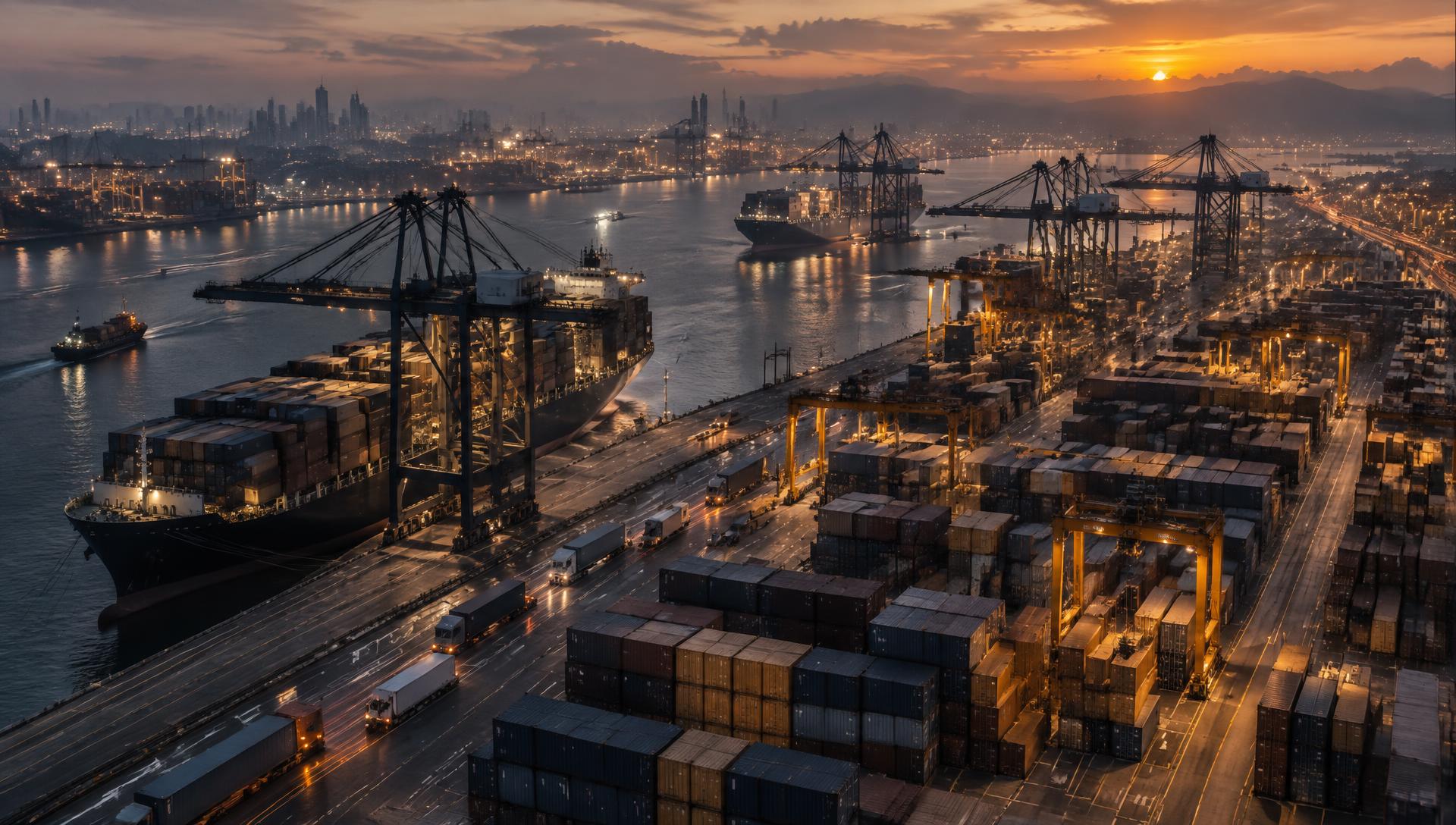
The lowest-cost supplier is not always the lowest-cost supply chain. Why uncertainty, predictability and optionality belong in the sourcing equation.
The most expensive number in international trade may be the one that changes after the deal has already been planned.
For decades, companies have evaluated international sourcing through familiar numbers: product cost, freight, duties, insurance, exchange rates, lead times and domestic logistics. Those numbers still matter. But another question increasingly belongs beside them: how dependable are these assumptions six months from now?
Tariffs can change. Shipping disruptions can alter costs and transit times. Geopolitical events can affect currencies, energy prices and transportation routes. New regulatory requirements can add expenses that were absent from the original quotation.
The result is a sourcing environment in which the lowest quoted price does not necessarily produce the lowest commercial cost. Uncertainty itself has economic consequences, because businesses spend money, commit capital and change plans in response to what might happen.
The Traditional Sourcing Equation Is Changing
A simplified sourcing calculation begins with:
Product Cost + Freight + Duty + Logistics = Landed Cost
That calculation remains essential, but it is a snapshot based on current assumptions. It does not fully describe what happens when those assumptions change between placing an order and receiving the shipment.
UN Trade and Development (UNCTAD), in its January 2026 Global Trade Update, identifies frequent policy shifts as a source of uncertainty that discourages investment and disrupts supply chains. Businesses can experience a commercial impact before a new measure takes effect: they may accelerate shipments, increase inventories, diversify sourcing or postpone investment while waiting for clarity.
Each response carries a cost. Earlier shipments tie up working capital sooner; additional inventory requires storage and financing; delayed investment can mean a missed opportunity.
A broader way to frame the decision is:
Landed Cost + Exposure + Uncertainty = Real Commercial Cost
This is a decision framework, not an accounting formula. Uncertainty cannot always be assigned a precise dollar value. Ignoring it, however, does not make its consequences disappear.
Tariffs Are Only Part of the Story
Tariffs attract attention because they are visible. Technical regulations, health and safety requirements, certifications and administrative procedures can be less obvious, yet equally consequential.
According to UNCTAD's May 2026 Global Trade Update, non-tariff measures impose higher export costs than tariffs for 88% of countries. That finding concerns the relative burden across countries; it does not mean every product or shipment faces the same costs.
A manageable tariff can therefore coexist with substantial expenses for testing, labeling, documentation or regulatory compliance. Many requirements serve legitimate goals, including consumer safety and environmental protection.
The commercial challenge is predictability. Clear requirements allow companies to budget and prepare. Poor transparency or changing procedures can create delays, repeat testing and unplanned expenses. Market access depends on understanding the conditions attached to a sale, as well as the duty charged at the border.
From Lowest Cost to Resilient Cost
Global supply chains have delivered enormous efficiencies by concentrating production and purchasing at scale. But concentration can also leave a business exposed to a single supplier, country or transportation route.
UNCTAD's January update describes companies diversifying suppliers and moving production closer to key markets to reduce risk. International sourcing is continuing, while the definition of an efficient supply chain evolves.
A slightly more expensive source may create greater value if it offers predictable delivery, alternative transportation options or less exposure to a single point of failure. Those benefits matter when a disruption would interrupt customer supply or erase the original saving.
The lowest-cost supplier is not always the lowest-cost supply chain.
This is where optionality becomes valuable: having alternatives before they become necessary. It can mean qualifying a secondary manufacturer, maintaining supplier relationships in another country, identifying alternative routes or holding an appropriate buffer for critical inputs.
These choices require investment. The goal is to match that expense to the exposure, rather than duplicate every supplier or add inventory indiscriminately. An alternative has practical value only if the company understands its capacity, requirements and time to activation.
Global Trade Is Not Disappearing
Despite policy uncertainty and logistics pressures, international trade remains resilient. UNCTAD estimates that global goods trade reached approximately $13.7 trillion in the first half of 2026, up 12.5% from the same period in 2025.
A significant share of that increase reflected higher prices rather than stronger physical volumes, and growth was uneven across regions and sectors. The figures should not be read as evidence that every business is enjoying stronger demand. They do show that cross-border commerce continues on an enormous scale.
Companies are adapting their supply networks and purchasing decisions. The question is how to manage international sourcing when conditions can change after a commercial commitment has been made.
Predictability Has Economic Value
The WTO's World Trade Report 2026 explains how binding commitments and transparency reduce uncertainty and support trade and investment. The principle applies within a business: better visibility makes it easier to commit resources with confidence.
Procurement teams can test the assumptions behind a quotation. What happens if duties change, freight increases or compliance takes longer? If a critical source becomes unavailable, how quickly can the business adapt?
The best sourcing decision may be the one that continues to make economic sense when conditions are less than perfect. Price still matters, but flexibility, regulatory visibility and continuity belong in the calculation.
The question is no longer simply, "What does this product cost today?"
Increasingly, businesses must also ask:
"How much confidence do we have in what this product will cost — and whether this supply chain will still work — tomorrow?"
Key Takeaways
- Uncertainty has a commercial cost: responses to possible disruption can consume cash and change sourcing economics.
- Tariffs are only part of the equation: UNCTAD finds higher export costs from non-tariff measures for 88% of countries.
- The lowest-cost supplier is not always the lowest-cost supply chain.
- Optionality provides room to adapt when alternatives are understood and ready to use.
- Global trade remains resilient, but growth in trade value does not necessarily mean equivalent growth in volumes.
Continue Reading
The New Cost of Uncertainty — how changing trade conditions are pushing importers to treat inventory as a risk-management decision.
From Lowest Cost to Lowest Risk — why international sourcing decisions increasingly extend beyond the initial purchase price.
Sources & Further Reading
UNCTAD — Global Trade Update January 2026: Top trends redefining global trade in 2026
UNCTAD — Invisible barriers are reshaping global trade
https://unctad.org/news/invisible-barriers-are-reshaping-global-trade
UNCTAD — Global Trade Update July/August 2026: Global trade continues to expand amid rising price pressures
WTO — World Trade Report 2026
https://www.wto.org/english/res_e/publications_e/world-trade-report-2026_e.htm