
The Modern Supply Chain: From Efficiency to Resilience
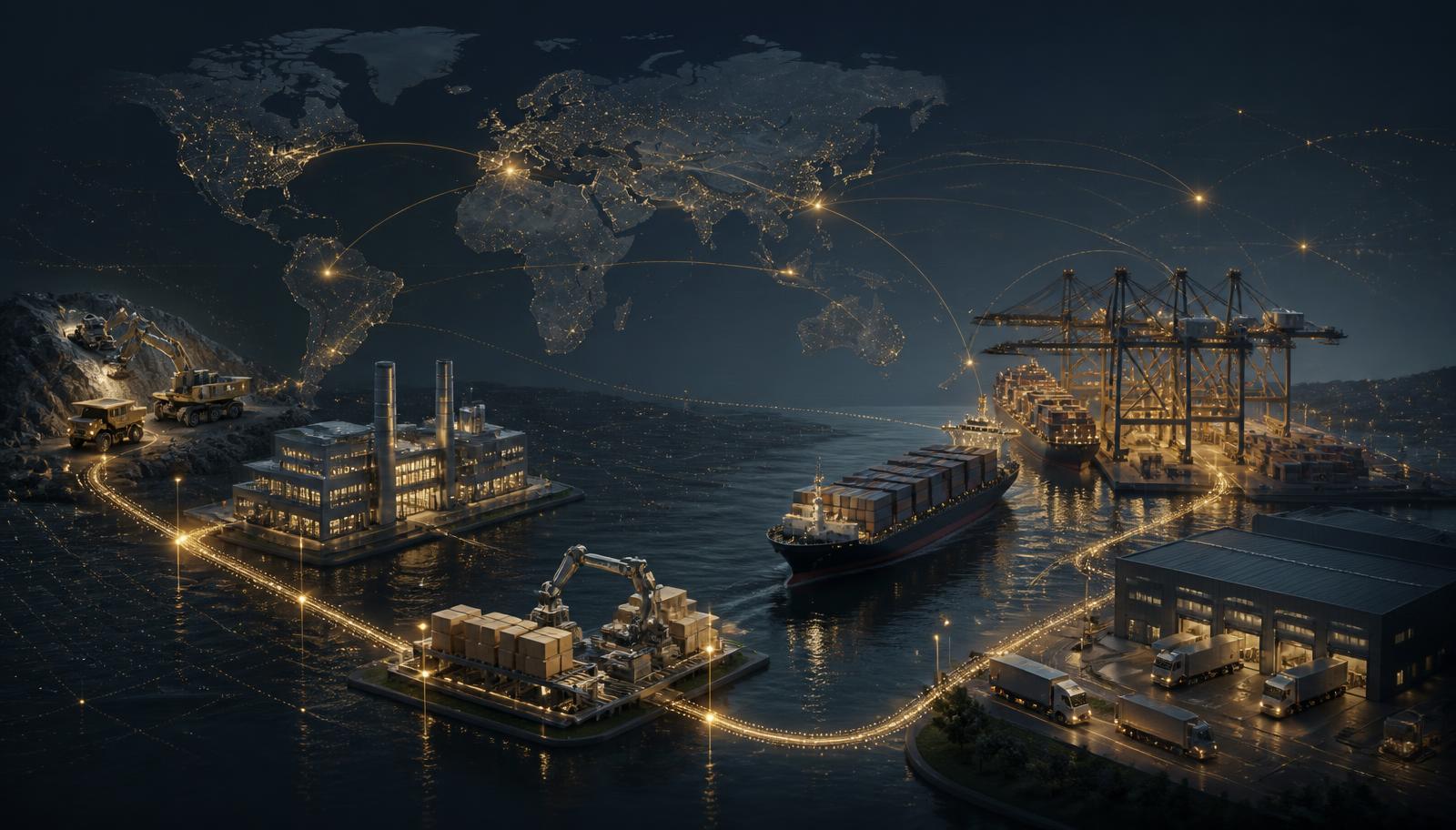
How visibility, diversification, and coordination are reshaping the movement of goods across global markets.
For many years, supply chains were designed with a clear objective: move products as efficiently as possible. Lower transportation costs, predictable delivery schedules, lean inventories, and optimized production helped businesses improve competitiveness while meeting customer demand.
Efficiency remains essential, but recent years have shown that global supply chains must also adapt when conditions change. Rather than replacing efficiency, resilience has become an increasingly important characteristic of modern international commerce.
Supply Chains Are More Connected Than Ever
Every product reaching a customer typically passes through a network of organizations working across multiple countries. Manufacturers, logistics providers, ports, customs authorities, warehouses, distributors, and retailers all contribute to a connected ecosystem where information and operations continuously interact.
From Efficiency to Resilience
Businesses have traditionally measured supply chain performance through cost, speed, and inventory optimization. Today, resilience is increasingly understood as the ability to continue operating effectively when unexpected events occur.
Efficiency helps a supply chain perform under expected conditions. Resilience helps it continue functioning when conditions change.
Visibility Has Become a Strategic Advantage
Shipment tracking, production updates, inventory information, supplier communication, documentation status, and transportation capacity all contribute to greater visibility across the supply chain.
Diversification Is About Flexibility
Diversification extends beyond adding suppliers. It can include production locations, transportation routes, logistics partners, inventory strategies, and sourcing regions, providing greater flexibility throughout the network.
Coordination Connects Every Stage
Production, documentation, customs, transportation, warehousing, and distribution are interconnected. Effective coordination helps maintain the overall flow of international commerce.
Looking Ahead
Global supply chains continue to evolve alongside advances in technology, changing regulations, shifting markets, and international trade policies. Increasingly, organizations seek a balance between efficiency, resilience, and transparency.
Why It Matters
Understanding how supply chains are evolving provides valuable context for interpreting changes in global commerce. As supply networks become increasingly interconnected, resilience is emerging as a defining characteristic of modern trade.
Key Takeaways
- Modern supply chains balance efficiency with resilience.
- Visibility and timely information are essential components of supply chain performance.
- Diversification extends beyond suppliers to transportation, production, and logistics strategies.
- Coordination across organizations plays an increasingly important role in global commerce.
- Resilience reflects the ability to adapt while maintaining the movement of goods.
Sources & References
- OECD — OECD Supply Chain Resilience Review (2025)
- World Trade Organization — Global Value Chain Development Report 2025
- World Bank — Logistics Performance Index
- UNCTAD — Global Supply Chains Under Strain