
Beyond the Smoothie: The Many Lives of Tropical Fruit
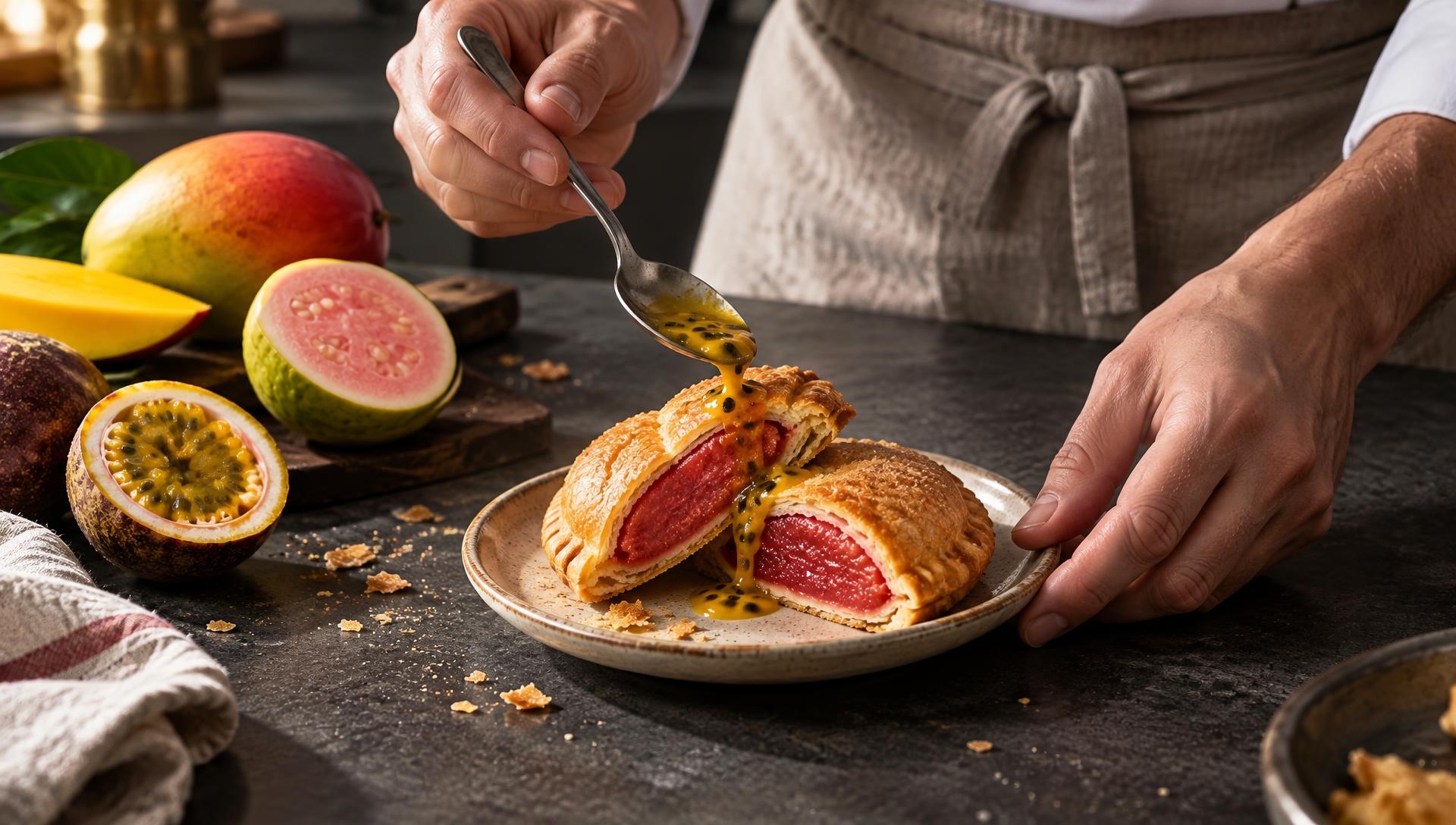
How tropical fruit pulps become ingredients in everyday foods—and possibilities for something new.
A tropical fruit can reach the consumer without ever appearing in the produce aisle.
It may become the filling in a pastry, the fruit preparation in a yogurt, a sauce served with dinner or the flavor of a frozen dessert.
The consumer experiences the finished product. Behind it is an ingredient that began in an orchard, on a farm or in a tropical growing region far from where it is eventually enjoyed.
Smoothies and juices are familiar destinations for tropical fruit pulps. But they represent only part of the story.
For food businesses, a fruit’s commercial potential extends well beyond the way it is first encountered.
From Fruit to Ingredient
When we think about fruit, we tend to picture something ready to eat: a mango cut into slices, a guava in a fruit bowl or a passion fruit opened with a spoon.
Food manufacturers approach those same fruits with another set of questions.
What flavor will this contribute? How will it interact with other ingredients? Does the product need sweetness, acidity, color, body or a distinctive aroma?
Processing fruit into pulp or purée creates an ingredient that can be incorporated into many different foods.
The result is a connection between agriculture and product development. A fruit grown in one region becomes part of a recipe, menu or manufactured product somewhere else.
Its identity remains important, but its application can change considerably.
Mango Has More Than One Destination
Mango provides a useful starting point because many consumers already recognize its flavor.
It can appear in a beverage, a yogurt, a sorbet or a pastry filling. Those products offer different eating experiences, even when mango is the common ingredient.
CBI’s research on the European mango purée market identifies applications across beverages, dairy products, bakery and confectionery. It also describes uses in sauces and desserts. These are established applications, rather than evidence that every segment is growing at the same pace. Source
For a manufacturer, that versatility creates choices.
Mango might be the principal flavor, or it might form part of a blend. The development task is to determine the role it should play in the finished product.
The question moves from “Can we use mango?” to “What do we want mango to contribute?”
Passion Fruit Can Change the Character of a Product
Passion fruit offers another direction.
Its distinctive aroma and tart flavor make it recognizable in drinks, but its uses extend into desserts, confectionery and savory preparations.
Embrapa’s culinary resources include passion fruit preparations such as mousses, cakes, ice creams and sauces. That range illustrates how one fruit can move between different parts of a menu. Source
Consider the difference between a passion fruit drink, a dessert cream and a sauce accompanying a meal.
The fruit connects them, yet the surrounding ingredients and the intended experience are different.
For product developers, this is an invitation to look beyond familiar categories. A fruit associated with a beverage may also have a role in a filling, topping or accompaniment.
The application still needs testing. A promising flavor combination is the beginning of development, rather than a finished commercial formula.
Guava Connects Familiar Traditions with New Formats
Guava has a long-established place in Brazilian sweets and fruit preparations.
Its uses include pastes, jams, nectars, frozen pulps and ice creams, as described by Brazil’s agricultural research and extension institute Incaper. Source
That variety makes guava an interesting example of how traditional uses can inform new product ideas.
A familiar fruit preparation can inspire a bakery filling, a dessert layer or a combination with another ingredient. The opportunity may involve introducing a known flavor to a different audience or presenting it in a format that better fits the occasion.
Innovation does not always require discovering an unfamiliar fruit.
Sometimes it begins by looking differently at one people already know.
Cupuaçu Broadens the Conversation
Other fruits invite consumers to encounter a less familiar flavor.
Cupuaçu, strongly associated with the Brazilian Amazon, has established uses in products including creams, ice creams, nectars, sweets and confectionery. Embrapa has documented its processing and food applications for decades. Source
For audiences unfamiliar with the fruit, the finished product can provide an accessible introduction.
A dessert, a filling or a frozen product gives the consumer a context in which to experience a new flavor.
That does not mean cupuaçu—or any lesser-known fruit—is destined to become the next global sensation. Consumer acceptance, formulation, pricing and reliable supply all influence whether an idea becomes commercially viable.
But unfamiliarity alone does not define a fruit’s potential.
The Application Comes First
These examples share a practical lesson: the same fruit does not automatically perform the same way in every product.
A beverage and a bakery filling have different requirements. A frozen dessert and a sauce are prepared, stored and consumed differently.
Before choosing an ingredient, a development team needs to understand the intended result.
How prominent should the fruit flavor be? What texture is required? Will the preparation be heated or frozen? How will it interact with the rest of the recipe?
The answers help determine which pulp, purée or fruit preparation is suitable.
This is where commercial interest becomes a development project. The ingredient must work in the actual product, under the conditions in which it will be made and used.
A Wider View of Tropical Fruit
For international buyers, tropical fruit pulps offer a way to explore ingredients through their possible applications.
A distributor may see opportunities across several customer categories. A manufacturer may find a flavor that complements an existing range. A foodservice business may discover another use for an ingredient it already purchases.
The strongest ideas connect a fruit’s characteristics with a clear purpose.
A tropical fruit’s journey does not end when it becomes pulp. In many cases, that is where its next commercial story begins.
Beyond the smoothie lies a much wider conversation about what these ingredients can become.
Key Takeaways
- Tropical fruit pulps have applications across beverages, desserts, dairy products, bakery, confectionery and sauces.
- Familiar fruits can find new uses, while less familiar fruits can reach consumers through approachable products.
- The intended application should guide ingredient selection and formulation testing.
- A promising concept becomes a commercial opportunity when consumer appeal, product performance and reliable supply come together.
Continue Reading
Brazilian Tropical Fruit Pulps: A Buyer’s Guide to Products, Processing and International Trade
How Açaí Became a Global Superfruit
Sources & Further Reading
CBI — The European market potential for mango purée
Embrapa — Passion fruit recipes and food applications
https://www.atermaisdigital.cnptia.embrapa.br/web/maracuja/receitas
Incaper — Guava production and processing applications
https://incaper.es.gov.br/fruticultura-goiaba
Embrapa — Technological processing of cupuaçu
https://www.infoteca.cnptia.embrapa.br/bitstream/doc/668786/1/CPAADOC.696.pdf