
Global Trade Is Growing — But It Is Becoming Harder to Navigate
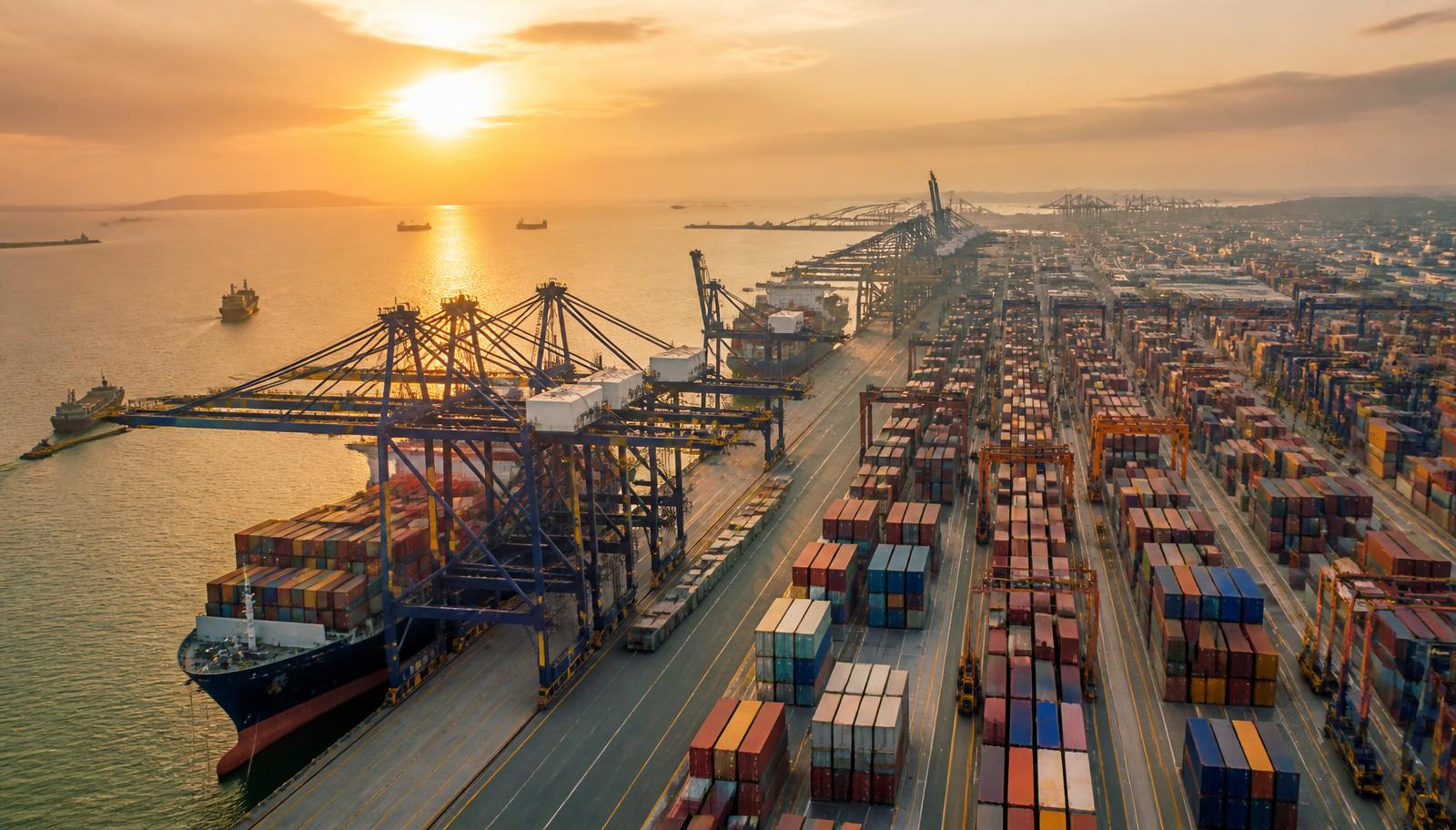
International trade continues to expand despite tariffs, geopolitical disruption and rising costs. But behind the headline growth is a global trading system becoming more complex, uneven and demanding to manage.
Global trade has proven remarkably difficult to stop.
Over the past several years, businesses have navigated a pandemic, shipping disruptions, geopolitical conflicts, changing tariff policies, inflation, energy shocks and repeated predictions that globalization was retreating.
Yet goods continue to cross borders at extraordinary scale.
According to UN Trade and Development (UNCTAD), global goods trade reached an estimated $13.7 trillion during the first half of 2026, approximately 12.5% higher than during the same period a year earlier. Services trade increased by 10.5%. Together, goods and services added roughly $2 trillion to global trade, putting 2026 on course for a record annual value if there is no significant contraction during the second half of the year.
At first glance, those numbers appear to tell a simple story.
Global trade is growing.
But underneath those numbers, something much more interesting is happening.
Trade is growing while simultaneously becoming more expensive, more fragmented and more difficult to navigate.
And for companies buying and selling internationally, understanding that distinction may be more important than the headline growth itself.
Growth in Value Does Not Tell the Entire Story
One reason global trade values have risen so sharply is that prices have risen with them.
UNCTAD estimates that prices for internationally traded goods increased approximately 3.6% during the first quarter of 2026 and about 5% during the second quarter.
Higher energy prices and increased transportation, logistics and production costs contributed to that increase.
The difference becomes clearer when trade is measured by volume rather than dollars.
According to the World Trade Organization, the volume of world merchandise trade increased 3.2% year over year during the first quarter of 2026, while its dollar value increased approximately 11%.
Both measures demonstrate growth.
But they describe very different things.
The first tells us that more goods are moving through the international trading system.
The second also captures what those goods—and the process of moving them—now cost.
For importers, exporters and manufacturers, that distinction matters.
A larger global trade number does not necessarily mean an easier or more profitable trading environment.
Trade Is Growing Unevenly
The expansion is also far from uniform.
East Asia has been one of the strongest drivers of recent trade growth, supported by significant increases in imports and exports from China, South Korea and other Asian economies.
The WTO reported particularly strong trade growth across Asia during the first quarter of 2026, while other regions experienced substantially different conditions. Middle Eastern trade flows, for example, were significantly affected by regional conflict and disruption around the Strait of Hormuz.
South America presents another interesting picture.
According to WTO data, cumulative South American export volumes have increased 22.5% since the beginning of 2023, while imports have risen 24.5%. Among major regions, only Asia recorded stronger cumulative export growth over that period.
Globalization, therefore, is not simply expanding or contracting.
It is being reorganized.
Different regions, industries and trade corridors are moving at different speeds.
That creates opportunities—but it also requires companies to understand where those opportunities are developing.
Technology Is Creating New Trade Flows
Some of the strongest growth in international trade is coming from industries that barely existed at their current scale a few years ago.
Artificial intelligence is a striking example.
The rapid construction of data centers and AI infrastructure has created enormous international demand for semiconductors, electrical components, cooling equipment, energy infrastructure and critical minerals.
UNCTAD reported that during the first quarter of 2026, trade increased approximately 38% for critical minerals, 25% for semiconductors, 15% for batteries, 14% for information and communications technology products, and 11% for electric vehicles.
The WTO similarly reported that the value of trade in AI-enabling goods increased more than 40% year over year during the first quarter.
This illustrates something important about international commerce.
Trade does not simply respond to economic growth.
It also responds to technological change.
New technologies create new products, new infrastructure requirements, new supply chains and ultimately new international trading relationships.
While some traditional industries may slow, entirely new categories of trade can emerge alongside them.
Policy Is Changing the Timing of Trade
Government policy is also increasingly influencing when companies move goods.
In July 2026, U.S. containerized imports reached approximately 2.5 million twenty-foot equivalent units (TEUs), the fourth-highest July volume on record.
Part of that strength came from importers accelerating shipments ahead of expected tariff changes.
The Port of Los Angeles experienced a similar pattern.
It handled approximately 960,000 TEUs in July—its second-highest July volume—as retailers and other importers brought goods into the United States earlier than usual ahead of tariff changes.
This practice, often called front-loading, demonstrates how trade policy can reshape supply chains even before a tariff takes effect.
Companies may increase orders.
Production schedules may be accelerated.
Warehouses may receive inventory earlier than planned.
Shipping capacity can tighten.
Ports may experience unusual surges.
And then volumes may decline later because businesses have already imported goods they otherwise would have purchased months afterward.
The product itself has not changed.
The demand may not have changed.
But policy uncertainty has changed the timing of the entire transaction.
Geopolitics Has Become an Operational Variable
International companies have always monitored political developments.
What has changed is how quickly geopolitical events can become operational problems.
A conflict thousands of miles from a buyer or supplier can affect shipping capacity, insurance costs, energy prices, vessel routes and delivery schedules.
The disruption surrounding the Strait of Hormuz provides a current example.
UNCTAD has linked the disruption to higher energy, transportation and logistics costs during the first half of 2026. The WTO has also cautioned that the full impact on global trade statistics may not yet be visible because shipping disruptions occurred late enough in the first quarter that much of their effect will appear in subsequent data.
For businesses, geography therefore matters beyond simply knowing where a supplier is located.
Companies increasingly need to understand the trade corridors connecting that supplier to the customer.
A reliable producer is important.
So is the route that connects that producer to the market.
Efficiency Alone Is No Longer Enough
For many years, international supply chains were designed primarily around efficiency.
Companies sought lower production costs, minimal inventory, predictable transportation and highly optimized supplier networks.
That model worked extremely well when the underlying system remained relatively stable.
Today, efficiency still matters.
But resilience, visibility and flexibility increasingly matter alongside it.
Companies are asking different questions.
What happens if a shipping route becomes unavailable?
Can another supplier produce the same specification?
How quickly can production be adjusted?
Are alternative ports available?
How much inventory should be carried?
Can the supplier provide accurate documentation?
Does the buyer understand where the product truly originates?
These are no longer theoretical questions.
They have become part of everyday international sourcing.
The Supplier Relationship Is Becoming More Important
Complexity also changes what companies should expect from suppliers.
When international trade was relatively predictable, a transaction could often be evaluated primarily on product, price and delivery.
Those remain essential.
But increasingly, buyers also need communication, transparency and operational visibility.
A supplier that communicates production delays early can help a buyer adjust inventory.
A producer that maintains accurate documentation can reduce customs risk.
A sourcing partner that understands local conditions can identify problems before they become international problems.
And a buyer that maintains strong relationships at origin may have more options when conditions suddenly change.
This is one reason international sourcing cannot always be reduced to comparing quotations.
The lowest price on a spreadsheet does not necessarily represent the lowest total risk.
More Complexity Does Not Mean Less Opportunity
It would be easy to interpret today's environment pessimistically.
Tariffs are changing.
Shipping routes are under pressure.
Energy and logistics costs have risen.
Geopolitical risk remains elevated.
Supply chains are becoming more complicated.
Yet international trade continues to expand.
That may be the most important signal of all.
Businesses adapt.
Suppliers find new customers.
Buyers discover new sources.
Trade routes change.
Technology creates new demand.
And countries that previously played smaller roles in global commerce can become increasingly important participants.
International trade has always evolved in response to economic and political change.
What we are seeing today is another stage of that evolution.
Navigating the New Trading Environment
The companies that succeed in this environment will not necessarily be those that predict every tariff, conflict or disruption correctly.
That would be impossible.
They will more likely be the companies that build enough visibility and flexibility into their operations to respond when conditions change.
That means understanding suppliers beyond the quotation.
Understanding logistics beyond the freight rate.
Understanding origin beyond the shipping documents.
Understanding inventory beyond the carrying cost.
And understanding international sourcing as an ongoing relationship rather than a single transaction.
Global trade is not disappearing.
The latest numbers suggest quite the opposite.
But the system supporting that trade is becoming more dynamic, interconnected and demanding.
The opportunity remains enormous.
The challenge is learning how to navigate it.
Why This Matters
Global trade is on course for a record year in value, but headline growth can obscure the complexity underneath it.
Higher prices, geopolitical disruption, changing tariff policies, new technology-driven trade flows and shifting regional patterns are simultaneously reshaping how products move around the world.
For importers and exporters, the question is therefore no longer simply whether global trade is growing.
It is whether their sourcing, logistics and supplier strategies are prepared for the environment in which that growth is occurring.
Key Takeaways
- Global goods trade reached an estimated $13.7 trillion during the first half of 2026, up approximately 12.5% year over year.
- Part of that increase reflects higher prices; merchandise trade volume grew much more moderately.
- Trade growth is increasingly uneven across regions and industries.
- AI, semiconductors, critical minerals, batteries and other technology-related products are creating significant new international trade flows.
- Tariff uncertainty is changing when companies import goods, leading to front-loading and unusual shipping patterns.
- Geopolitical events can quickly affect transportation routes, energy costs and logistics.
- Companies are increasingly balancing efficiency with resilience, visibility and supplier diversification.
- Strong supplier relationships and better understanding of operations at origin are becoming increasingly valuable.
- Growing complexity does not mean international trade offers fewer opportunities—it means navigating those opportunities requires greater preparation.
Continue Reading
Where Was It Really Made? Why Product Origin Matters More Than Ever
As governments increase scrutiny of transshipment and tariff circumvention, understanding where a product truly originates is becoming an essential part of international sourcing.
References
Reuters — July U.S. Container Imports Hit Fourth-Highest on Record
Reuters — Port of Los Angeles Posts High July Volume, Helped by Retail Goods and AI Project Parts